Standard, catalogue industrial equipment is designed to fit as many buyers as possible within a fixed range of sizes and specifications. Custom-engineered equipment starts from the opposite direction: it's designed around one buyer's exact process, constraints, and goals, with no assumption that the result needs to work for anyone else. That difference in starting point is what separates the two categories — and it explains both the advantages and the added cost of going custom.
Why standard equipment sometimes isn't enough
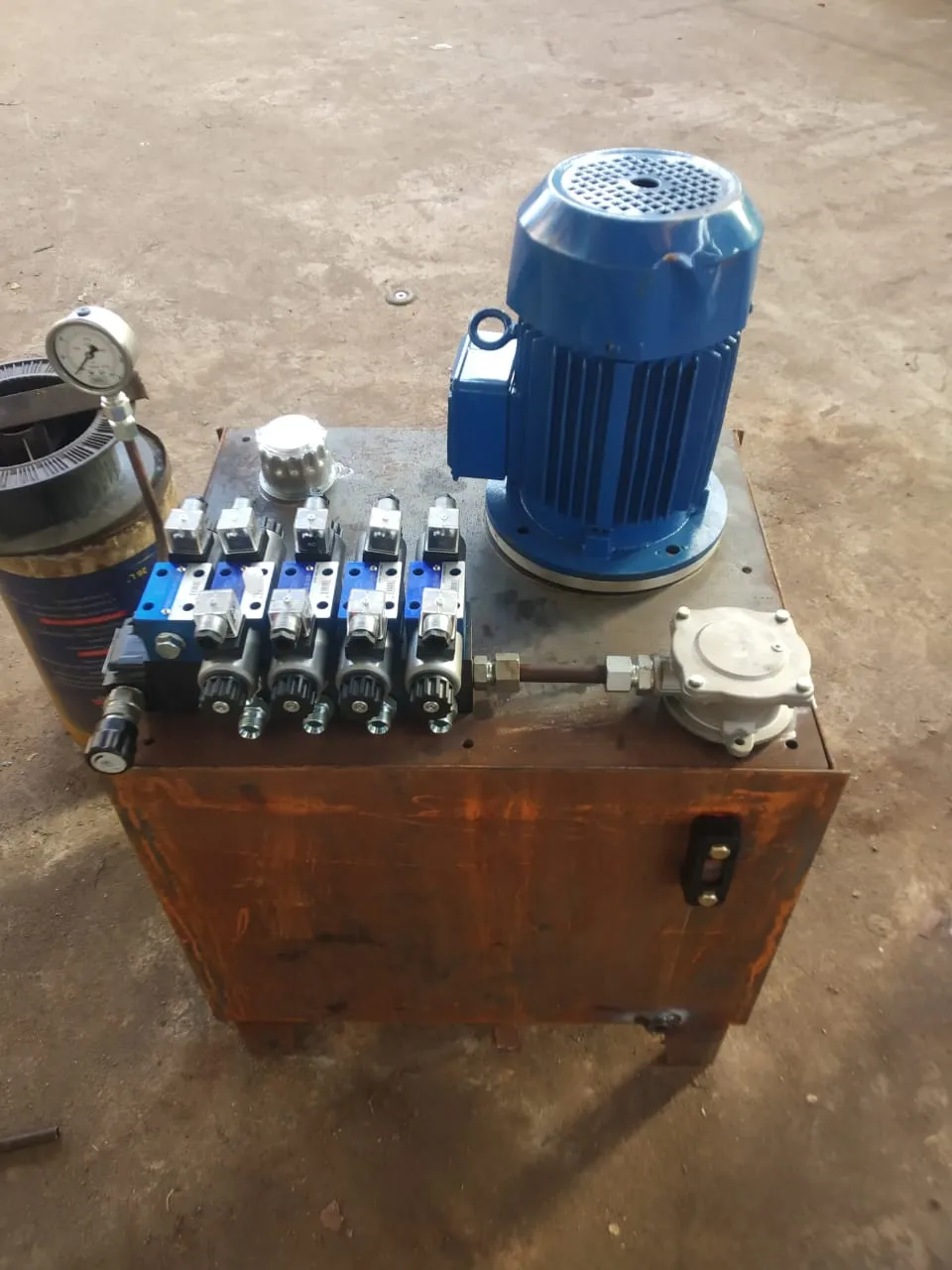
Special purpose machines exist specifically because standard, off-the-shelf equipment can't efficiently handle certain industrial tasks — a process with unusual dimensional requirements, a layout constraint a catalogue machine's footprint doesn't accommodate, or a duty cycle outside what a standard product was rated for. Fin tube machines, hydraulic power packs, hydraulic cylinders, and hydraulic bag stackers are examples of equipment that gets adapted across power generation, petrochemicals, HVAC manufacturing, food processing, and heavy fabrication — the versatility comes from the equipment being engineered around a function, then configured for each buyer's specific application, rather than sold as one fixed configuration.
The engineering difference
Custom equipment goes through the same design discipline as any well-built machine — structural analysis, certified materials, coded welding, non-destructive testing, and proof load testing where applicable — but every one of those steps is calibrated to the specific buyer's requirement rather than a generic specification. A hydraulic cylinder built to catalogue bore sizes and stroke lengths is a different engineering exercise from one designed for a specific mounting configuration and pressure rating a customer's system actually requires.

What buyers actually get from going custom
The core benefit of custom equipment isn't novelty — it's fit. Equipment engineered around a customer's actual dimensions, throughput, and constraints tends to perform better than a generic equivalent forced to work around a mismatch, the same way custom-sized C hooks measurably reduced coil handling time for one steel processing customer by fitting the plant's specific coil range rather than a general capacity rating. That pattern — precision fit translating into real operational gains — is the throughline across every category of custom equipment, from lifting attachments to thermal and hydraulic systems.
The trade-off: cost and lead time
Custom engineering takes longer than pulling a machine off a standard production line, and it typically costs more per unit, since the design work is bespoke rather than amortised across a large production run. That trade-off is worth it when a standard machine genuinely can't do the job — a mismatched footprint, an unusual duty cycle, dimensional requirements outside any catalogue range — but it's not the right choice when a standard product already fits the requirement well.
How to decide which one you need
The practical question isn't "custom or standard" in the abstract — it's whether an available standard machine actually fits your process, constraints, and goals closely enough. If it does, standard equipment is faster and cheaper. If it doesn't — if the fit requires compromises that cost more in lost efficiency or safety margin than a custom build would cost upfront — that's the point where custom engineering becomes the better investment, not just the more expensive option. Bring your process and constraints to our engineering team if you are not sure which side of that line you fall on.
Export Availability
Manufactured at Pragya's Pithampur (Indore) works and exported worldwide — 22+ countries across 5 continents to date. Every export order ships with test certificates, ocean-freight packing, and full customs documentation, quoted FOB or CIF.
Interested in our industrial equipment?
Our export team, based in Indore, India, will recommend the right solution and quote FOB or CIF pricing for your shipment.
Request a quote