A flaker and an expander do different jobs at different points in the same process line: the flaker thins conditioned seed into 0.25-0.35mm flakes to maximize surface area, while the expander takes that flaked (or cracked) material and pelletizes it, increasing bulk density by 40-50% before solvent extraction. They're sequential steps, not competing options for the same job.
What the flaker does
The flaker's entire purpose is surface area. Precision-ground rolls at HRC 60-65 compress conditioned seed into flakes 0.25-0.35mm thick, increasing surface area 10-15x over cracked seed. More surface area means solvent can reach more of the oil-bearing material faster during extraction — this is the step where extraction efficiency gets built in. Our flaker machine guide covers roll hardness and fines control.
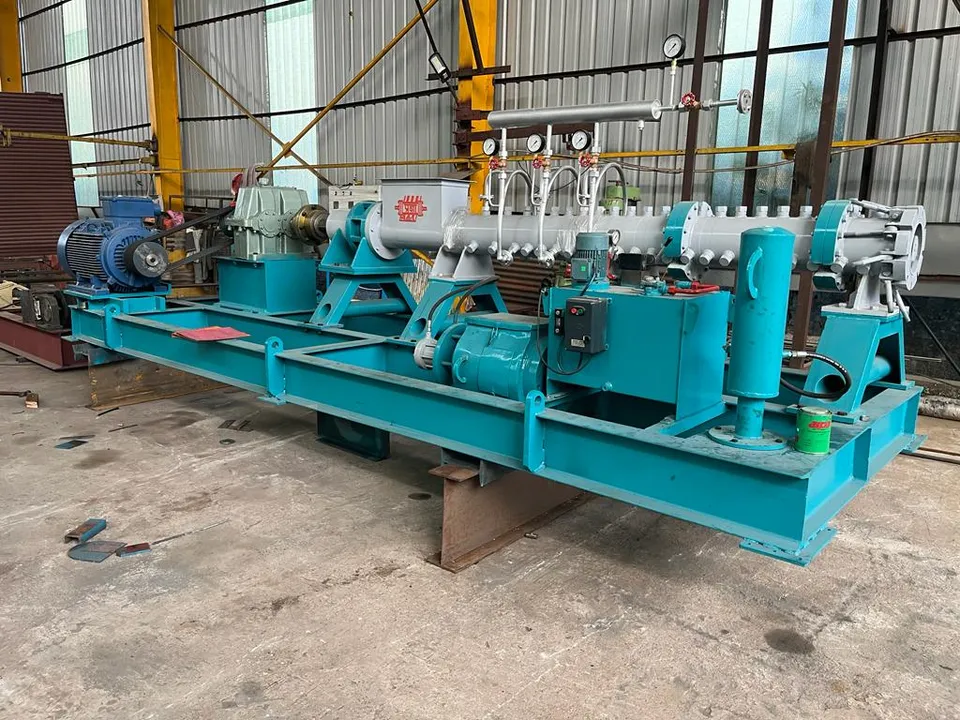
What the expander does
The expander takes the process in the opposite physical direction — instead of thinning material out, it uses a screw press with steam injection (3-8% by weight) to expand and pelletize it, raising bulk density from roughly 0.4-0.5 kg/L to 0.6-0.7 kg/L. That density increase lets the extraction column handle more material per unit volume, and the porous pellet structure the expander creates actually improves solvent penetration despite the material being denser overall — plus it cuts solvent consumption by 15-25%. On the naming: expander and extruder refer to the same machine in Pragya's line.
Side-by-side
| Flaker | Expander | |
|---|---|---|
| Function | Thins seed into flat flakes | Pelletizes material into porous, dense pellets |
| Effect on material | Increases surface area 10-15x | Increases bulk density 40-50% |
| Key spec | Flake thickness 0.25-0.35mm | Bulk density 0.6-0.7 kg/L |
| Position in line | After conditioning, before expanding | After flaking, before solvent extraction |
| Solvent impact | Enables efficient solvent contact | Reduces solvent consumption 15-25% |
Which one your line needs
In a standard solvent extraction line, you need both — they're not alternatives to each other. The flaker prepares seed for extraction by maximizing surface area; the expander then conditions that flaked material into a form the extraction column can process at higher throughput with less solvent. Skipping the expander stage is possible in simpler plant configurations, but it typically means lower column throughput and higher solvent consumption per tonne processed — a trade-off worth costing out against the capex of adding an expander to the line.
Why the sequence can't be reversed
It's worth being explicit that these two machines aren't interchangeable steps that could run in either order. The expander needs flaked (or at minimum cracked) material to work with — feeding whole or coarsely cracked seed into an expander's screw press wouldn't produce the uniform, porous pellet structure the process depends on. The flaker, in turn, depends on properly conditioned seed to produce clean flakes rather than excess fines — what a conditioner does explains why. Each machine's output is calibrated to be the next machine's expected input, which is why solvent extraction equipment gets specified and installed as a line rather than as independent machines chosen in isolation. Understanding this sequence matters when planning plant layout and when troubleshooting extraction efficiency problems, since a yield issue downstream often traces back to a flake thickness or bulk density spec that wasn't dialed in correctly further up the line.
Export Availability
Manufactured at Pragya's Pithampur (Indore) works and exported to oil seed processing plants worldwide — 22+ countries across 5 continents to date. Every export order ships with material test certificates, ocean-freight packing, and full customs documentation, quoted FOB or CIF.
Interested in our industrial equipment?
Our export team, based in Indore, India, will recommend the right solution and quote FOB or CIF pricing for your shipment.
Request a quote