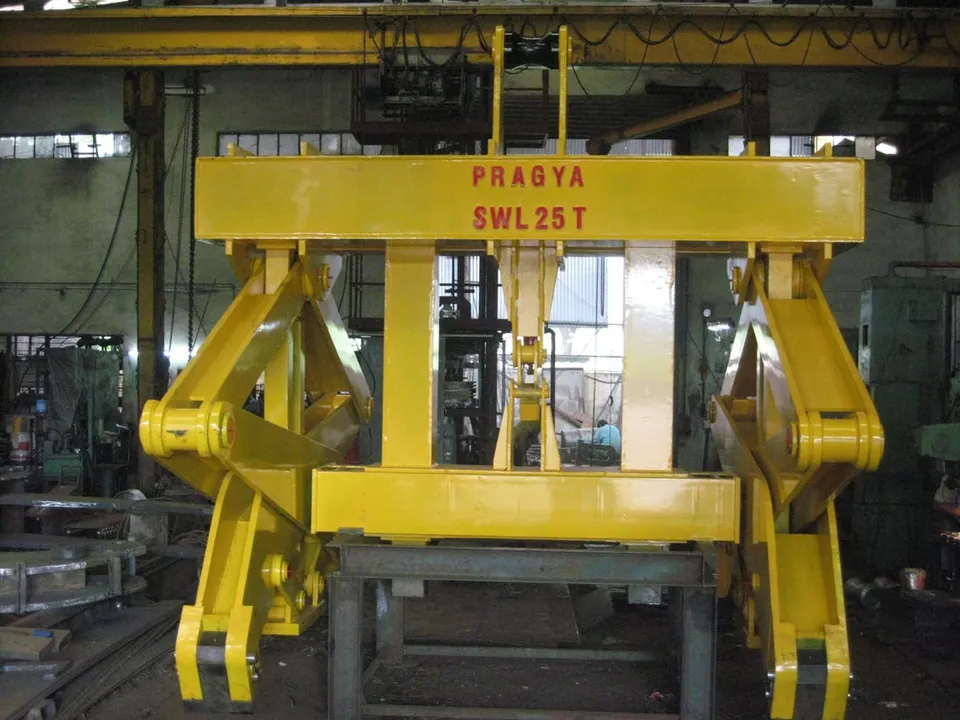
Container Loading C Hook — Coils, Pipes, Slabs and Packaged Cargo
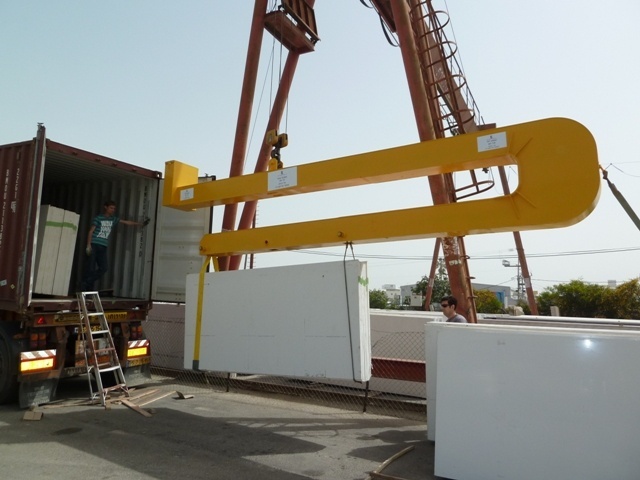
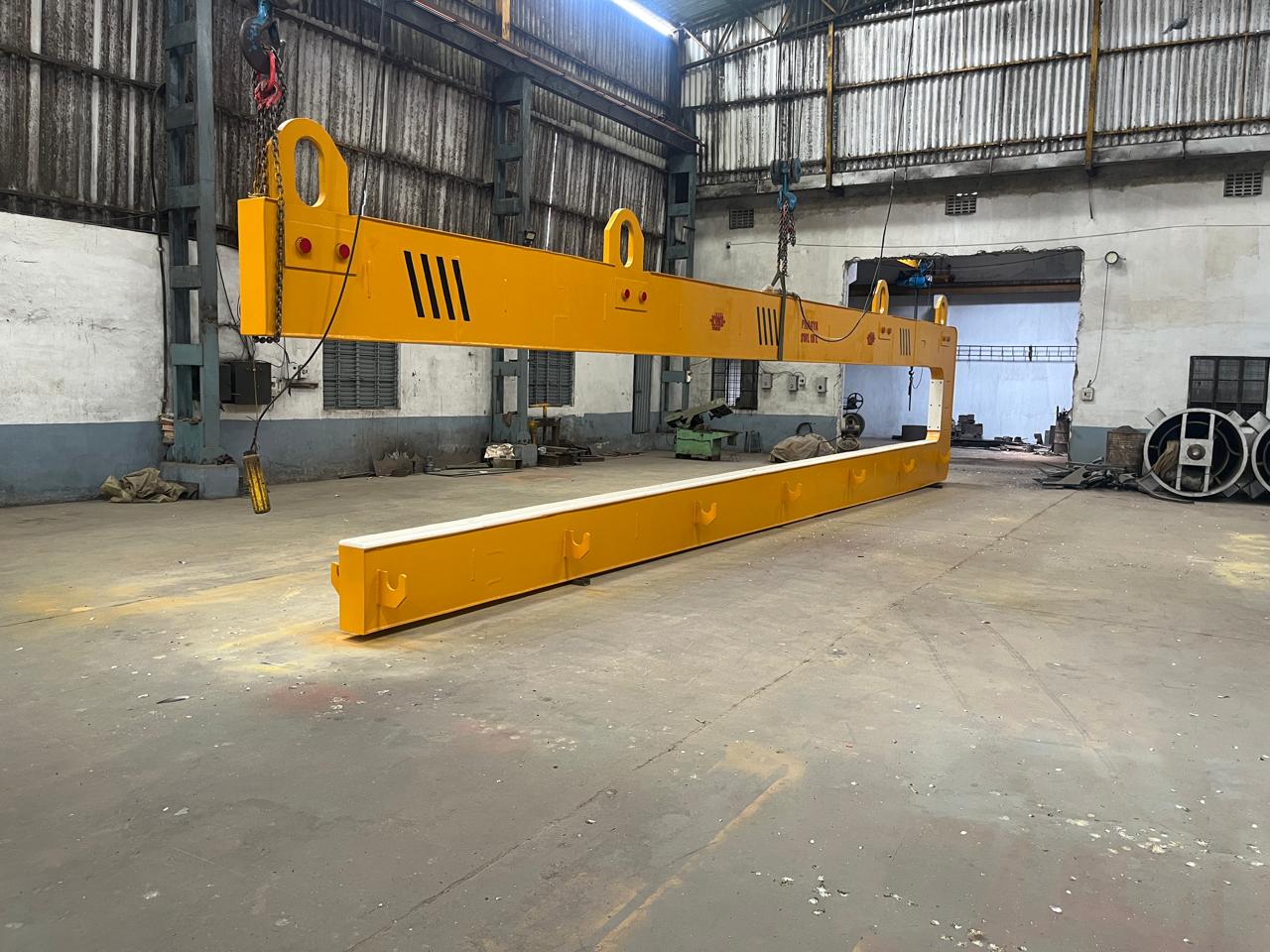
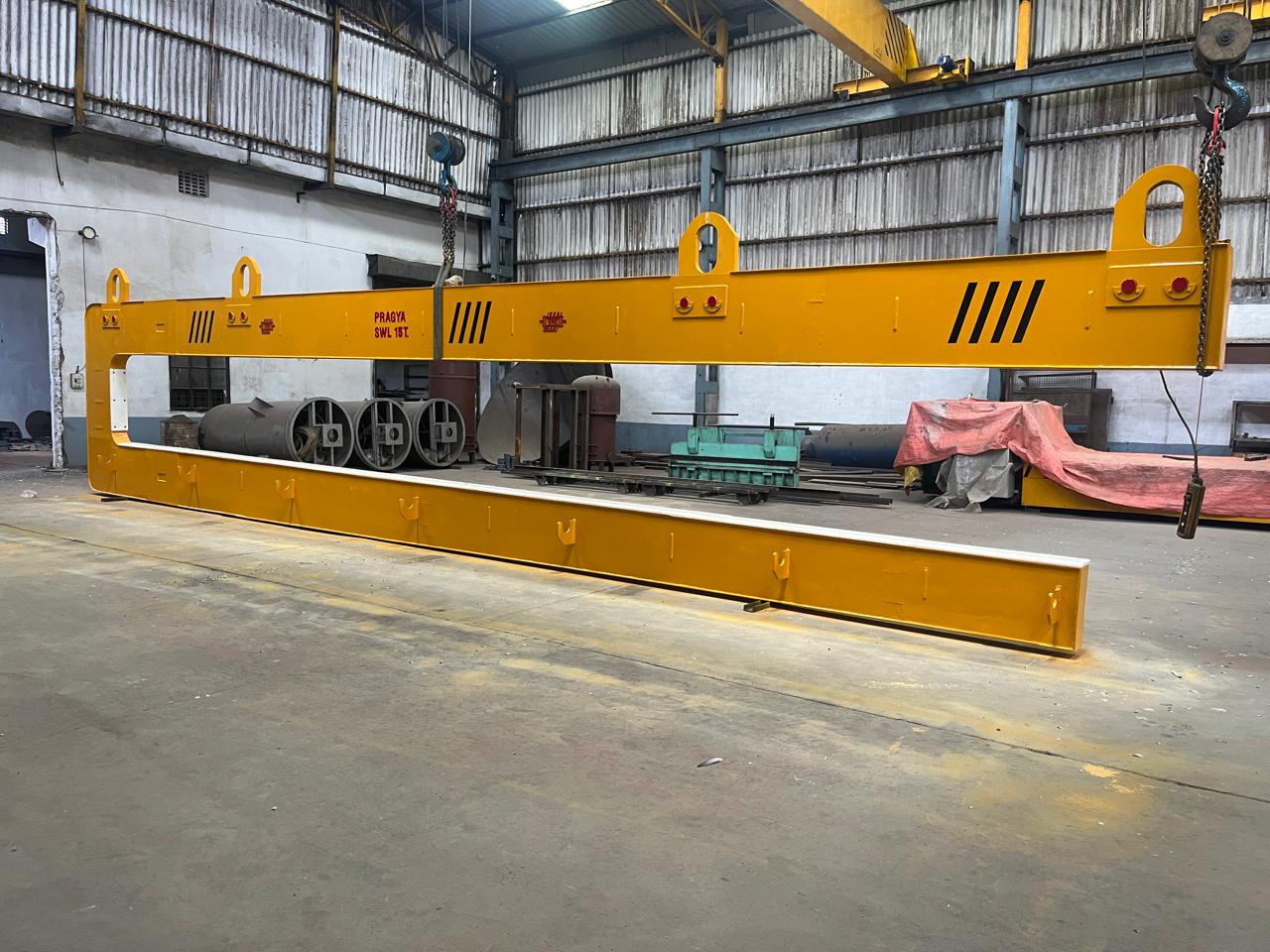
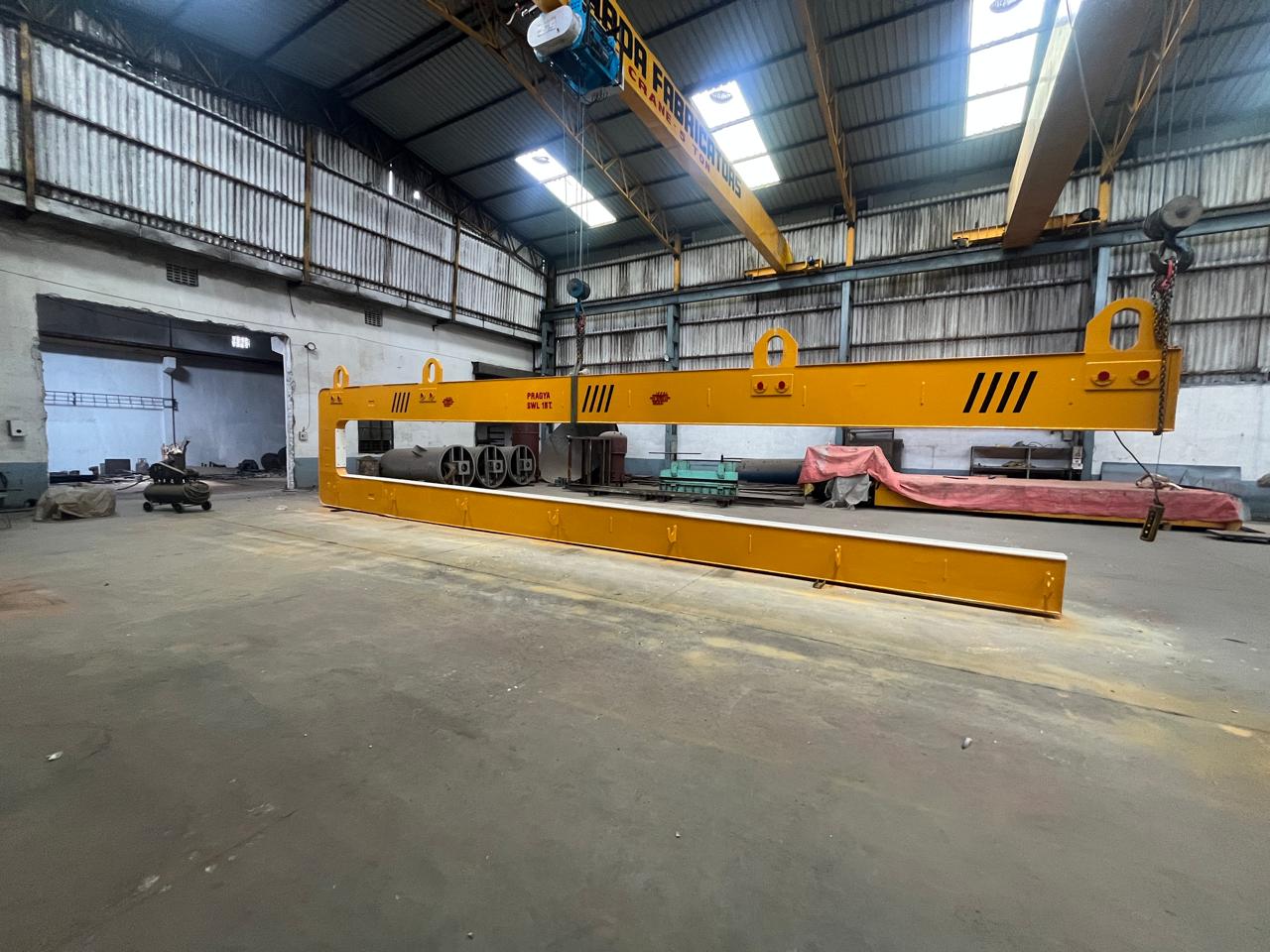
A container loading C hook is built around the one dimension that decides whether container stuffing works: the door opening. A standard closed dry container has a fixed roof, so the load goes in horizontally through a doorway roughly 2338 mm wide and 2280 mm high, then down to the nose of a box 5.9 m deep in a 20ft and 12.0 m in a 40ft.
That constraint belongs to the container, not the cargo, which is why one machine covers coils, pipes and bundles, slabs and plates, panel and sheet stock, and crated or palletised goods. Only the arm changes. The upright stays slim so hook and load clear the door frame together, and the reach keeps the crane hook itself out of the box.
Every Container Loading C Hook is built to order at our Pithampur works in India and exported to steel plants in 22+ countries across five continents. Because it is a below-the-hook device rather than a plant item, it normally travels as one fabricated piece — braced on a skid for flat rack or break bulk shipment, or split at bolted joints where the throat will not clear a container door.
- Load Capacity
- Set by container payload, typically 5-30 ton
- Standards
- ANSI/ASME B30.20
- Construction
- High-tensile alloy steel
- Built and shipped
- Made at Pithampur, India — exported worldwide, FOB Indian port
Arm Forms
- Twin fork arms: Pass underneath the load — slabs, plates, panel and sheet stock, crates and palletised cargo. The arrangement photographed above
- Single C arm: Enters the bore of a coil and lifts from the inside diameter, the same principle as a standard C hook
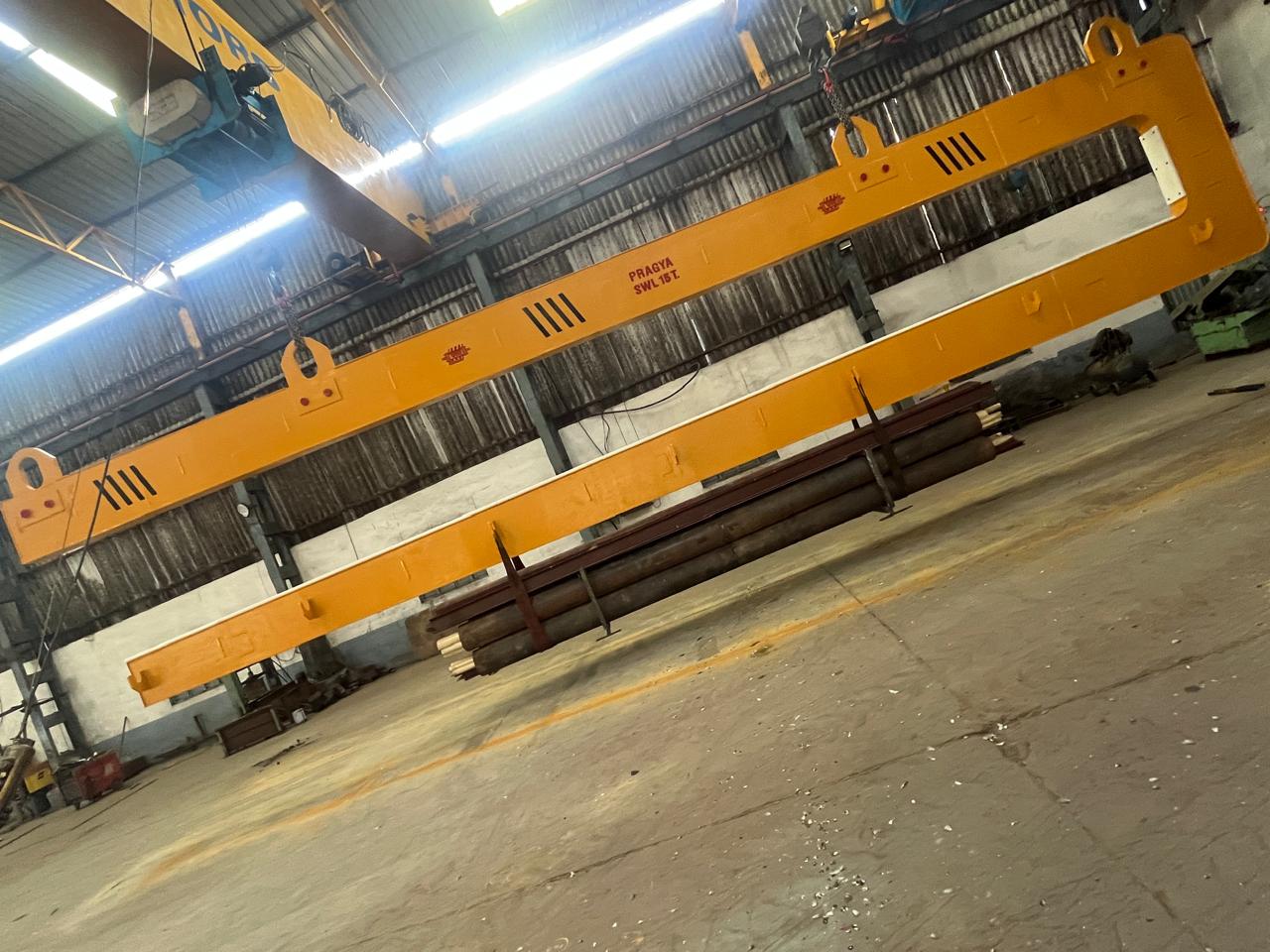
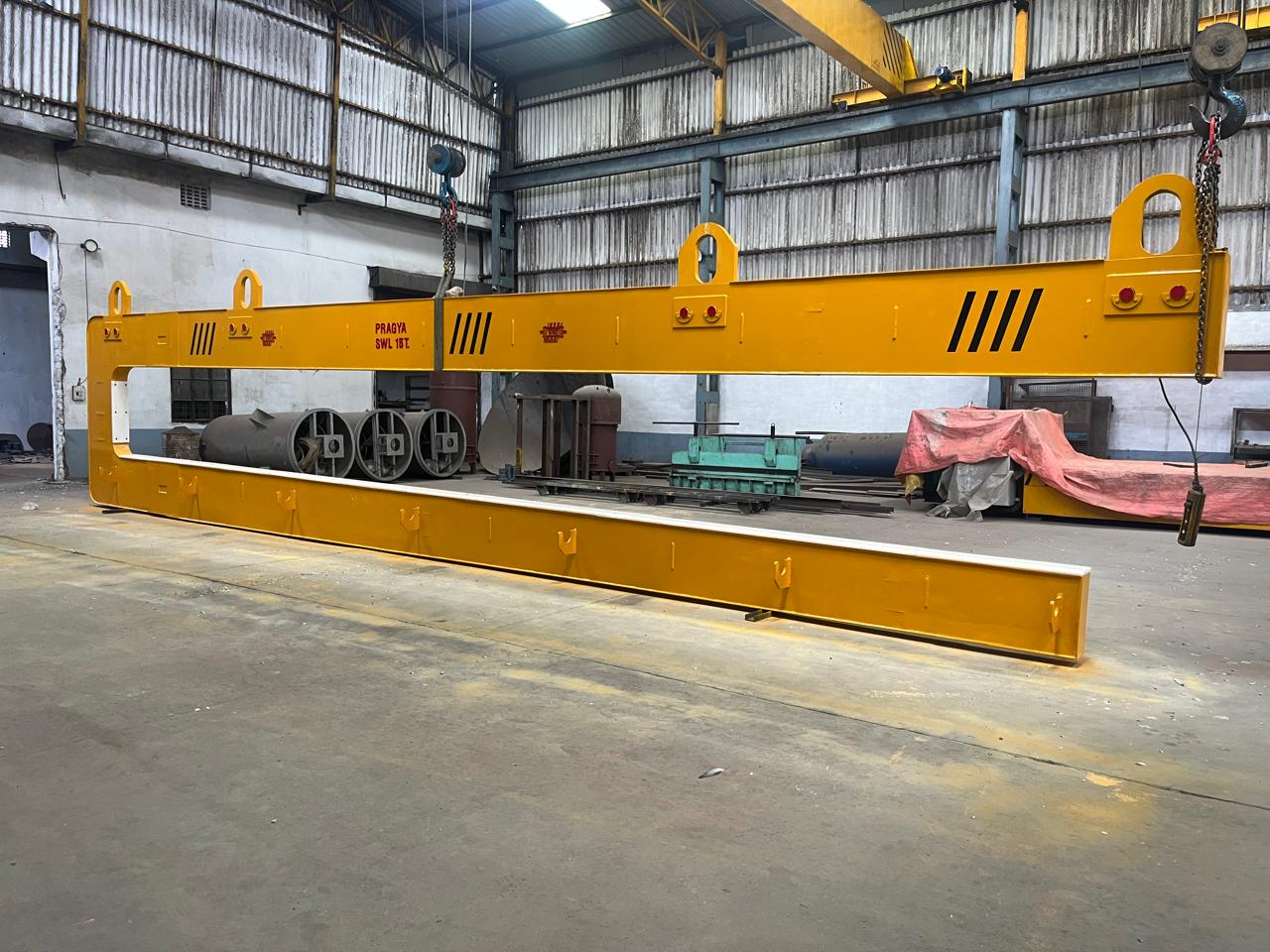
- Cradle arm (the pipe bundle hook): A long lower arm carrying a row of V-notch cradles, so a bundle is seated at several points instead of sagging across one. Multiple lifting points on the top beam balance the pick
- Adjustable counterweight: Trims the hook level across a range of load weights, so entry attitude stays predictable
- Forklift-mounted version: Where the dispatch bay has no crane over the container position
Specifications
Getting Cargo Into a Container
| Method | Container needed | What it handles | Where it fits |
|---|---|---|---|
| Container loading C hook | Standard closed dry box | Coils, pipes, slabs, plates, panels, crates | The usual case — closed boxes are what most exporters can actually book |
| Crane straight down through the roof | Open-top or hard-top | Anything craneable | Simplest move, but depends on open-top boxes being available and affordable |
| Forklift | Standard closed dry box | Palletised and forkable loads | Lighter loads, where mast height and floor loading allow the truck to work at the door |
Container internal and door dimensions are ISO standards for general-purpose dry boxes; confirm against the actual equipment your line supplies.
Key Features
- Counterbalanced to hang level when empty, so entry and withdrawal stay controlled
- Replaceable facings protect finished surfaces, coil bores and coated panel stock
- Leaves the load square and centred, so chocking and lashing go quickly
- Proof load tested with certification
Applications
- Stuffing steel and aluminium coils into export containers
- Loading pipe and tube bundles at saw pipe and tube plants, and into containers for export
- Slab, plate and sheet export dispatch
- Panel, board and sandwich-panel stock loading
- Crated machinery and project cargo
- De-stuffing incoming containers at the receiving bay
- Port, ICD and CFS handling; dispatch bays with restricted headroom
Export Supply and Shipping
- Shipping: FOB Nhava Sheva or Mundra, or CIF your port; flat rack, open top or break bulk chosen on the finished dimensions.
- Packing: Machined faces greased and wrapped, the piece bolted to an ISPM-15 heat-treated skid, and slinging points marked for the receiving crane.
- Certification: Proof load test and material test certificates, and CE marking where the destination requires it, issued with the shipment.
- Documents: Commercial invoice, packing list, certificate of origin and bill of lading emailed as soon as the shipment is loaded.
- Commercial: Quoted in US dollars, with payment terms agreed at order — letter of credit or telegraphic transfer.
Frequently Asked Questions
How does a container loading C hook differ from a standard C hook?
A standard C hook works in the open, where clearance is not the constraint. This one has to pass a container door opening — roughly 2338 mm wide by 2280 mm high on both 20ft and 40ft standard dry boxes — while carrying its load, then reach far enough down the box to set that load at the nose. So it is slim in the upright and the back, with long horizontal arms and the counterweight arranged to keep it level. A general-purpose C hook will not enter the box.
What can a container loading C hook handle besides coils?
Most things that fit through the door and hang stably on the arms: coils, pipes and pipe bundles, slabs and plates, panel and sheet stock, crated and palletised cargo, machinery. What changes is the arm — twin forks pass underneath flat and packaged loads, a single arm engages a coil bore, a cradle suits pipe bundles that would otherwise roll. The container, the reach and the clearances stay the same whatever is being loaded.
Is a pipe bundle hook the same thing as a container loading C hook?
It is the same machine with a different arm. A pipe bundle hook is this hook carrying the cradle arm — a long lower arm with a row of V-notch cradles that seats a bundle at several points instead of letting it bend across one, with multiple lifting points on the top beam so the pick can be balanced. Upright, reach and door clearances are identical to the coil and fork versions, because the container sets those, not the cargo.
What is eye-to-door coil loading?
It describes a coil's orientation inside the container: the eye (its bore) faces the doors, with the coil axis running along the length of the box. It is what a single-arm hook naturally produces, since the hook enters through the door already carrying the coil horizontally. The alternatives are eye-to-sky, lowered in bore-up through the roof of an open-top or hard-top box, and eye-to-side. Eye-to-door is what most closed-container coil exports use.
Why not just use an open-top container and load from above?
You can, and where open-top or hard-top boxes are available and sensibly priced, a crane lift straight down through the roof is the simpler move. The problem is availability and cost — standard closed dry containers are what most exporters can actually book, and those have a fixed roof, so the only way in is the door.
What capacity should a container loading C hook be rated for?
Usually by the container's payload limit rather than by the hook. A 20ft standard dry container takes roughly 24 to 28 ton depending on tare weight and the road limits at each end, so most container loading hooks are rated in the 5 to 30 ton band. Tell us what you are loading, its weight range and its dimensions, and we will rate the hook and pick the arm form.
Does the hook handle securing the load inside the container?
No — the hook places the load; securing is a separate operation done to the CTU Code. For coils that means timber chocking nailed to the container floor and built up to about half the coil height, chocks fore and aft, and lashings at roughly 30 to 60 degrees. Other cargo has its own pattern. Placing the load squarely in the first place is what makes that work quick.
Is the container loading C hook customised to my requirement?
Yes. Capacity, arm form, arm reach, throat opening and clearances are matched to the container type and the cargo you handle. Send your requirement via the enquiry form or call +91 91091 02280 for a firm quote. Equipment is manufactured to ANSI/ASME B30.20, proof load tested and certified; test certificates on request.
Can you export the Container Loading C Hook, and on what terms?
Yes — we have supplied buyers in 22+ countries across five continents, FOB Nhava Sheva or Mundra, or CIF your port. A device of this kind normally travels as one piece on a heat-treated skid, or split at bolted joints where the throat will not clear a container door.